Image 1 of 6
Image 2 of 6
Image 3 of 6
Image 4 of 6
Image 5 of 6
Image 6 of 6
Namazu the Earthshaker – Mythical Japanese Catfish & Sumo Wrestling
from $38.50
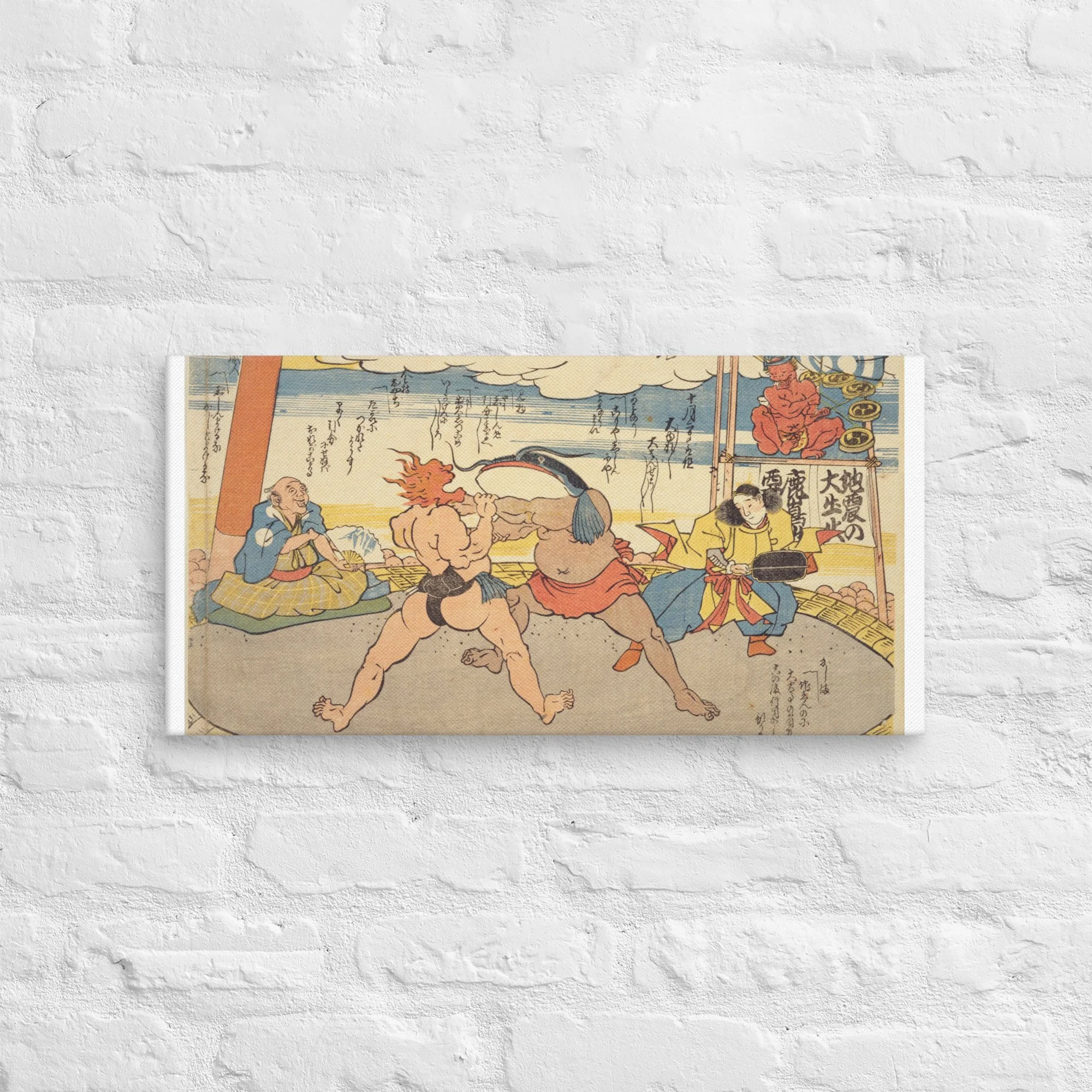
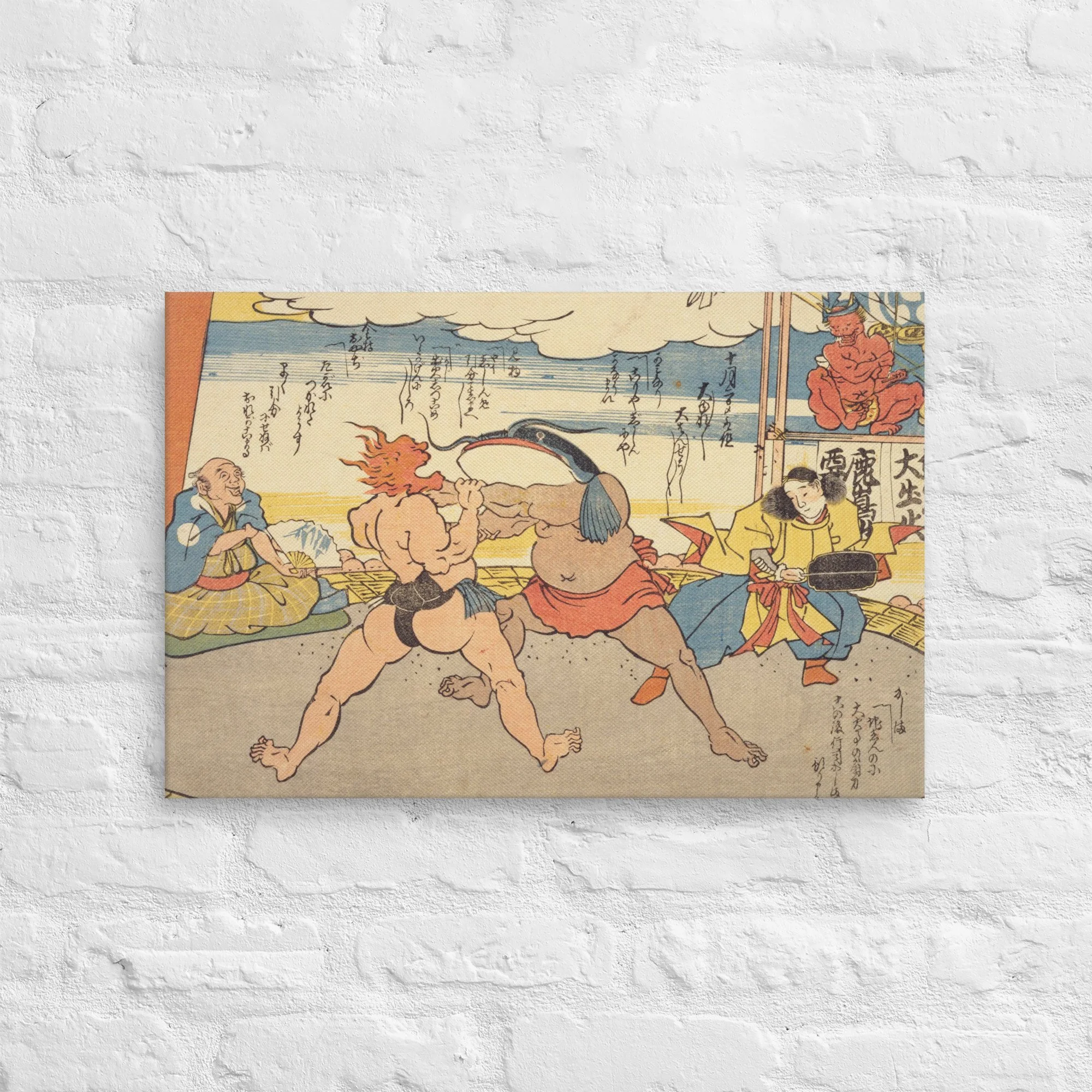
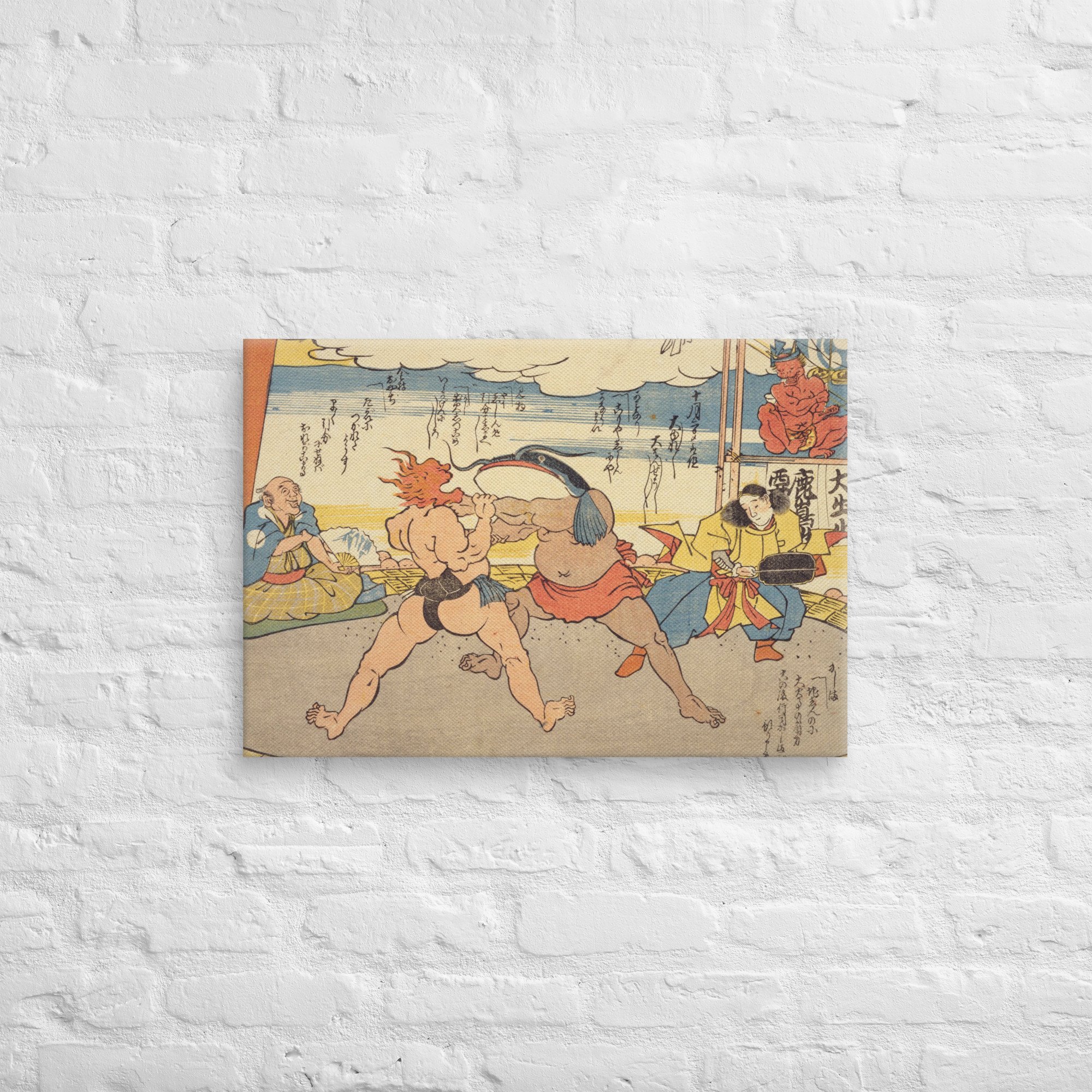
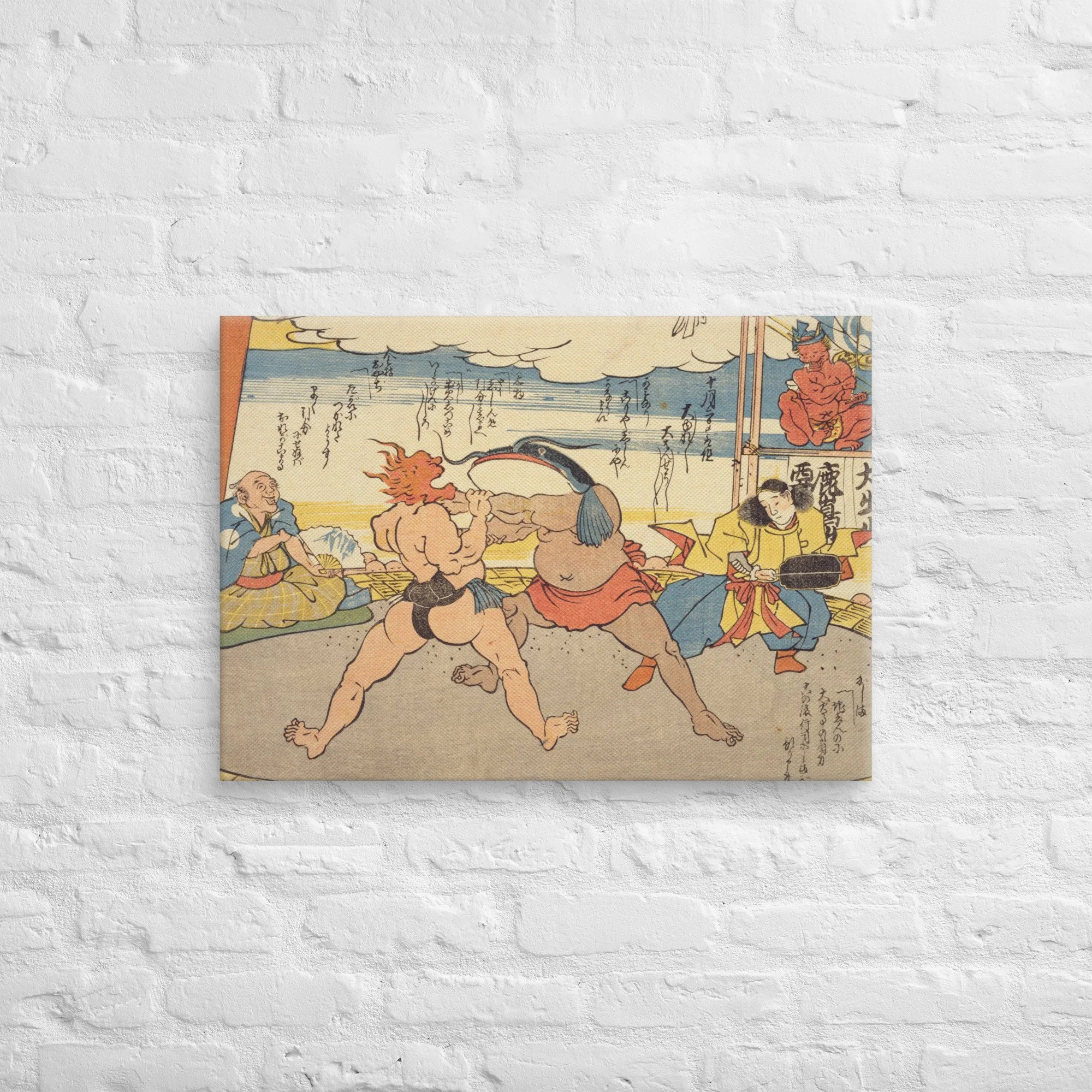
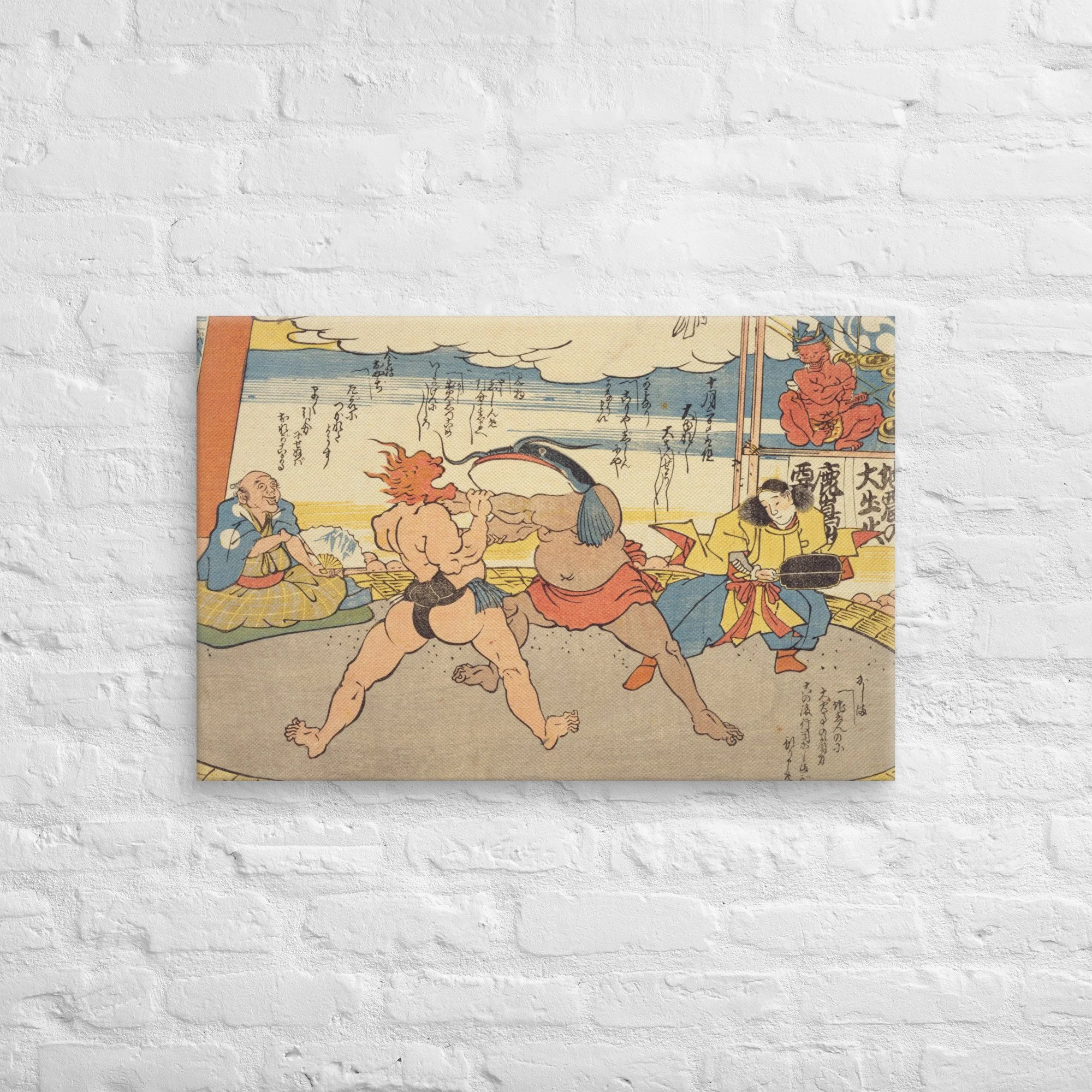
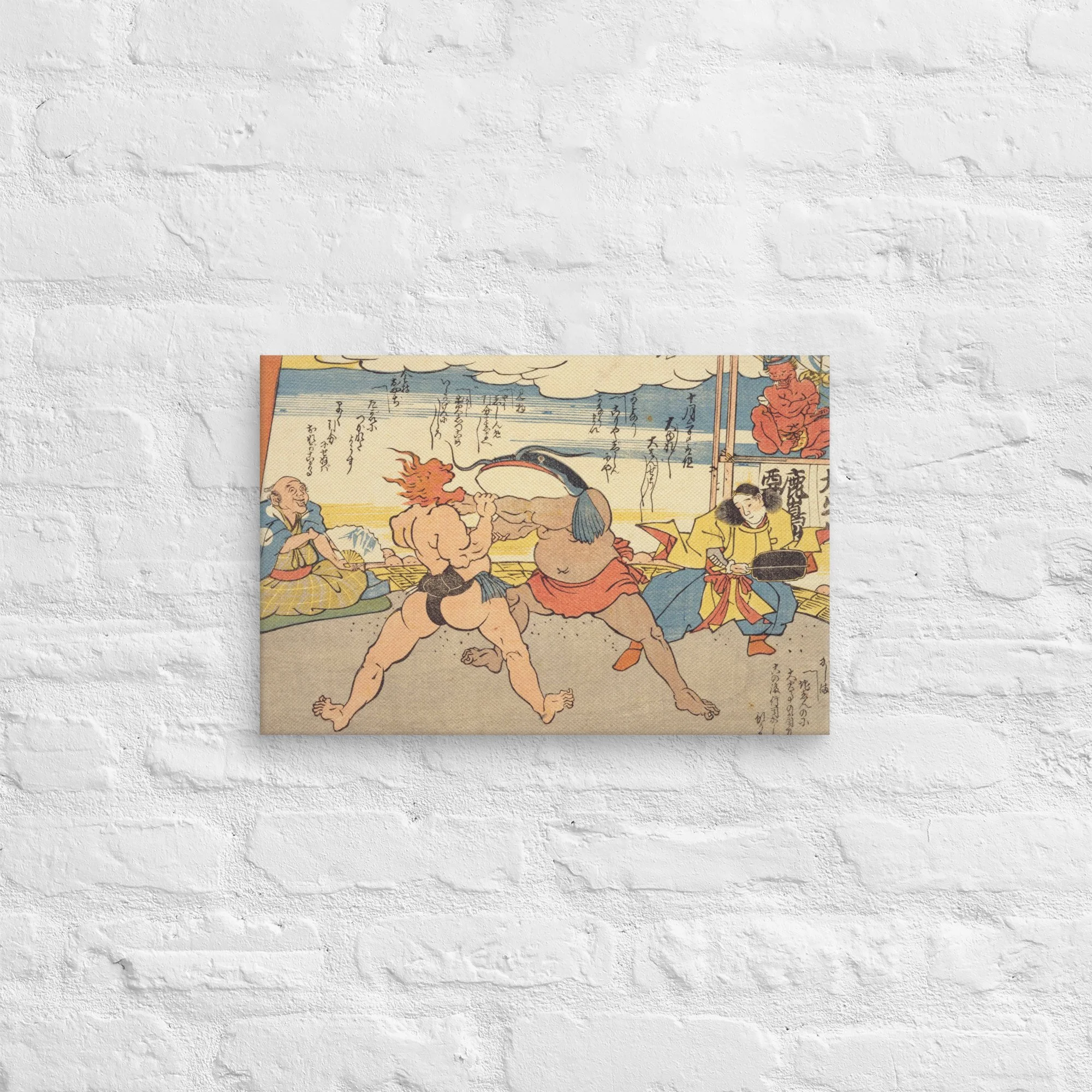
Own a high-quality canvas reproduction of the legendary 1855 woodblock print "Staged Great Earthquake and Sumo Wrestling Contest." This striking image belongs to the famous namazu-e (catfish picture) genre, which flourished in Edo (modern Tokyo) immediately following the devastating Ansei earthquake.
According to Japanese mythology, giant subterranean catfish called namazu caused earthquakes by thrashing in their underground lairs. In this satirical and vibrant scene, the catfish is personified as a sumo wrestler, symbolizing the raw, uncontrollable power of nature.
A Symbol of Resilience: Originally sold as "news" and protective charms, these prints were displayed in homes to ward off future tremors.
This piece captures the "world-rectification" (yo-naoshi) spirit of the 1850s, using humor to comment on the redistribution of wealth and societal shifts following the disaster.
Unlike traditional landscapes, this print offers a bold, anthropomorphic style that blends ancient folklore with the gritty reality of 19th-century Japan.
• 1.25″ (3.18 cm) thick poly-cotton blend canvas
• Canvas fabric weight: 10.15 +/- 0.74 oz./yd.² (344 g/m² +/- 25g/m²)
• Fade-resistant
• Hand-stretched over solid wood stretcher bars
• Mounting brackets included
• Blank product sourced from the US, Canada, Europe, UK, or Australia
According to Japanese mythology, giant subterranean catfish called namazu caused earthquakes by thrashing in their underground lairs. In this satirical and vibrant scene, the catfish is personified as a sumo wrestler, symbolizing the raw, uncontrollable power of nature.
A Symbol of Resilience: Originally sold as "news" and protective charms, these prints were displayed in homes to ward off future tremors.
This piece captures the "world-rectification" (yo-naoshi) spirit of the 1850s, using humor to comment on the redistribution of wealth and societal shifts following the disaster.
Unlike traditional landscapes, this print offers a bold, anthropomorphic style that blends ancient folklore with the gritty reality of 19th-century Japan.
• 1.25″ (3.18 cm) thick poly-cotton blend canvas
• Canvas fabric weight: 10.15 +/- 0.74 oz./yd.² (344 g/m² +/- 25g/m²)
• Fade-resistant
• Hand-stretched over solid wood stretcher bars
• Mounting brackets included
• Blank product sourced from the US, Canada, Europe, UK, or Australia
Size:
Own a high-quality canvas reproduction of the legendary 1855 woodblock print "Staged Great Earthquake and Sumo Wrestling Contest." This striking image belongs to the famous namazu-e (catfish picture) genre, which flourished in Edo (modern Tokyo) immediately following the devastating Ansei earthquake.
According to Japanese mythology, giant subterranean catfish called namazu caused earthquakes by thrashing in their underground lairs. In this satirical and vibrant scene, the catfish is personified as a sumo wrestler, symbolizing the raw, uncontrollable power of nature.
A Symbol of Resilience: Originally sold as "news" and protective charms, these prints were displayed in homes to ward off future tremors.
This piece captures the "world-rectification" (yo-naoshi) spirit of the 1850s, using humor to comment on the redistribution of wealth and societal shifts following the disaster.
Unlike traditional landscapes, this print offers a bold, anthropomorphic style that blends ancient folklore with the gritty reality of 19th-century Japan.
• 1.25″ (3.18 cm) thick poly-cotton blend canvas
• Canvas fabric weight: 10.15 +/- 0.74 oz./yd.² (344 g/m² +/- 25g/m²)
• Fade-resistant
• Hand-stretched over solid wood stretcher bars
• Mounting brackets included
• Blank product sourced from the US, Canada, Europe, UK, or Australia
According to Japanese mythology, giant subterranean catfish called namazu caused earthquakes by thrashing in their underground lairs. In this satirical and vibrant scene, the catfish is personified as a sumo wrestler, symbolizing the raw, uncontrollable power of nature.
A Symbol of Resilience: Originally sold as "news" and protective charms, these prints were displayed in homes to ward off future tremors.
This piece captures the "world-rectification" (yo-naoshi) spirit of the 1850s, using humor to comment on the redistribution of wealth and societal shifts following the disaster.
Unlike traditional landscapes, this print offers a bold, anthropomorphic style that blends ancient folklore with the gritty reality of 19th-century Japan.
• 1.25″ (3.18 cm) thick poly-cotton blend canvas
• Canvas fabric weight: 10.15 +/- 0.74 oz./yd.² (344 g/m² +/- 25g/m²)
• Fade-resistant
• Hand-stretched over solid wood stretcher bars
• Mounting brackets included
• Blank product sourced from the US, Canada, Europe, UK, or Australia